

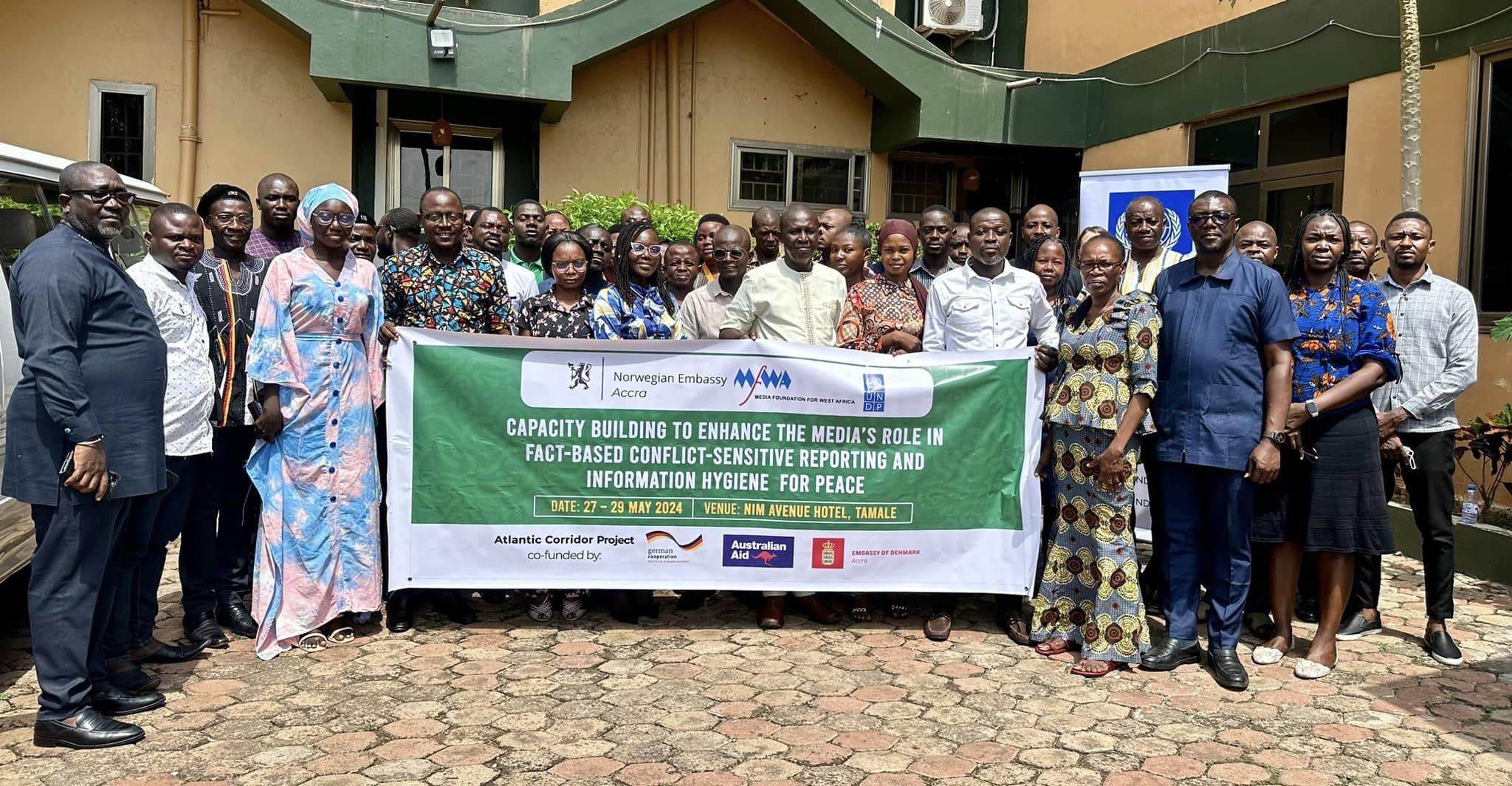
In a speech read on behalf of Dr Angela Lusigi, UNDP Ghana Resident Representative at the three day Training for Journalists on Hate Speech and Counter Narratives, She hinted that UNDP recognizes the role that disinformation, misinformation, and hate speech can play in promoting electoral violence, hatred, and violent extremism, while undermining electoral processes and democratic values.
The training which was centred on concept of conflict and peace, Frame work for media conflict sensitive reporting, and understanding fact-checking and tinkering with fact checking tools and Understanding Information Disorder in Ghana etc.
According to Dr. Angela, the media landscape has evolved in scope and complexity. Across Africa, social media has emerged as a pivotal platform for journalism and information-sharing. Adding that, more than 400 million people use social media and 600 million people have access to the internet in Africa.
She mentioned that radio remains the most popular among news sources, 4 in 10 Ghanaians get news from social media and the internet, according to the Afrobarometer survey in 2023. As a result, the widespread use of social media has given hate speech a much larger audience online.
The UNDP Ghana Resident Representative also says the role of journalists, bloggers, and other media outlet is crucial in this context. The media acts as a key source of information and has a significant influence on the public through its portrayal of events and perspectives. Discriminatory views against minority groups published by the media could for example fuel harassment and intimidation, which may drive radicalization and violent extremism.
According to the Africa Center for Strategic Studies she said, disinformation campaigns seeking to manipulate African information systems have surged nearly fourfold since 2022. West Africa is the region most targeted by disinformation, accounting for nearly 40 percent of documented disinformation campaigns in Africa. Ghana, with its vibrant political landscape and regular democratic elections, is not immune to these challenges of mis – information and disinformation.
Although an overwhelming majority of Ghanaians think social media usage makes people more aware of current happenings, almost 86 percent say it makes people more likely to believe fake news. During election periods, misinformation and hate speech often escalate, posing threats to the Page 3 of 4 country’s stability and security.
According to the Media Foundation for West Africa (MFWA), more than half of the 98 cases claimed to be factchecked by 2016 electoral campaign participants were found to be either completely false, half-truths, or misleading. Dr. Lusigi said, recognizing the gravity of these issues, UNDP in partnership with UNESCO and the wider UN team, is committed to addressing hate speech, disinformation and misinformation, in line with the UN Strategy and Plan of Action on Hate Speech.
In Ghana, the National Peace Council (NPC) and the National Media Commission (NMC) have published guidelines on hate speech and other forms of indecent expressions.
‘’ while we make efforts to combat disinformation and hate speech, it is imperative that we do not compromise press freedom. Press freedom serves as a critical protective barrier against false information and must be safeguarded at all costs’’.
Dr. Lusigi says we must harness the power of the media as a platform for engagement, debate, and the promotion of democratic values. Through the dissemination of counter-narratives, the media can contribute to combating hate speech by sharing views that instead encourage inclusion, equality, and stability. Indeed, as media stakeholders, you play a key part in promoting an environment that promotes human rights, democratic values, and peace and stability.
She encouraged all participants to learn from each other. Together, we can make tangible difference in advancing peace, security, and sustainable development in Ghana.
The Ghana Journalist Association (GJA) president of the Upper west Region Mr. Abdul Wahab Suwala thanked the organizers on behalf of the participants for such a wonderful training, stating that it will help to build their capacity as journalist in their field of work.

