

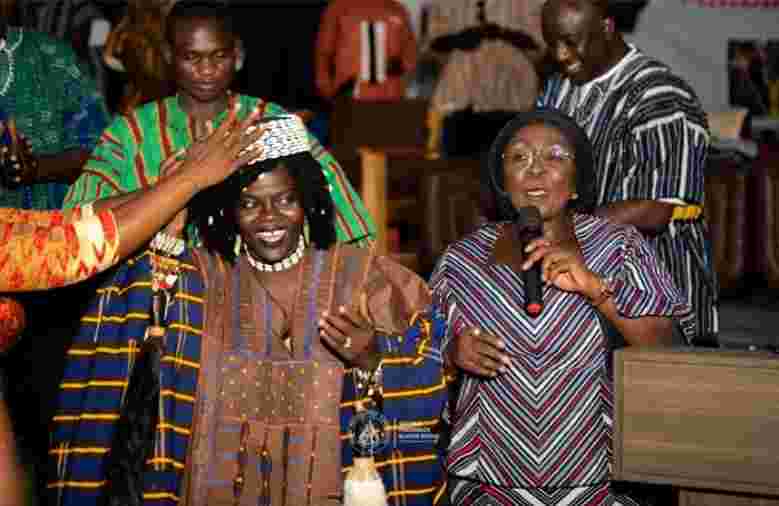
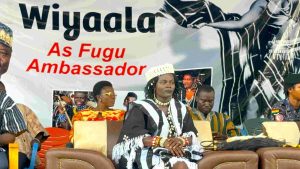
When Ghana’s Ministry of Tourism unveiled Wiyaala as the nation’s new Tourism Ambassador and crowned her Fugu Queen in May 2026, the announcement was more than ceremonial.
It was a recognition of a remarkable journey: an artist who chose to return to her roots rather than chase the bright lights of Accra or abroad, and who has since transformed her village of Funsi into a thriving cultural hub.
This achievement is significant not only for Wiyaala herself, but for Ghana, for the Sissala people, and for the wider conversation about how celebrities can drive meaningful community change.
The Return Home
In 2020, at the height of her international career, Wiyaala made a decision that startled many in
the Ghanaian music industry: she left the capital city and returned to Funsi, her home village in
the Upper West Region. For an artist celebrated across Africa and Europe, this was a bold move. She wanted to prove that success did not require abandoning one’s roots. “I always tell the young there are opportunities for employment right here in Funsi. Besides farming, which we are already known for,” she said.
“We are building, we need electricians, plumbers, blocklayers, tilers, carpenters and more. Look around, see what needs doing, learn a skill, do it well and that will put food on the table for the rest of your life.” Her words were not empty encouragement. They became the blueprint for a transformation.
The Lioness Kingdom
Five years later, the results are visible in what locals now call The Lioness Kingdom. At its
heart is the Wiyaala Arts & Cultural Centre, one of Ghana’s largest open‑air stages, with
capacity for 3,000 standing or 1,800 seated. It is a venue that rivals national infrastructure, built not in Accra or Kumasi, but in the upper west region of Ghana, Funsi.
Surrounding the centre are facilities that create a holistic cultural ecosystem:
- An 18‑room guesthouse, managed by her mother, welcoming visitors with Sissala hospitality.
- A family restaurant, run by her sister, serving traditional dishes from the farm to the kitchen.
- A community radio station, Pulung FM 88.5, and Pulung TV, broadcasting local news and culture to national audiences.
Together, these projects have created jobs, attracted tourism, and given Funsi a new identity as a cultural destination. Partnerships and Empowerment Wiyaala’s vision has not been limited to entertainment.
She has mobilised international NGOs Hi Chale (Germany) and Ghana Vision (Switzerland) to support farming initiatives, health outreach, and youth empowerment. These partnerships bring resources and training to a region often overlooked by national development agendas. Her presence has generated new energy and employment. Young people who once felt
compelled to migrate to cities now see opportunities at home. Carpenters, masons, caterers, tilers, sound engineers, and event organisers are finding work in Funsi. The ripple effect is tangible: local businesses thrive, families gain stability, and the community feels pride in its own capacity to grow.
The Symbolism of Fugu
The title of Fugu Queen carries deep cultural resonance. Fugu, the hand‑woven smock of
northern Ghana, is both a garment and a symbol of identity. By crowning Wiyaala, the
community and the state acknowledged her role in elevating Fugu from local attire to a national and international emblem.
Tourism Minister Abla Dzifa Gomashie noted that Wiyaala had worn Fugu long before it became fashionable online, embodying authenticity rather than trend. In making her Tourism
Ambassador, the government signalled that Ghana’s cultural exports are not only about beaches and safaris, but about living traditions carried by artists like Wiyaala.
The Importance of Celebrity‑Driven Change Celebrities often wield influence, but few translate it into lasting community impact. Wiyaala’s
story shows what is possible when fame is coupled with commitment. By returning home, she challenged the African narrative that success requires migration. By building the Lioness Kingdom, she created tangible opportunities. By accepting the titles of Tourism Ambassador and Fugu Queen, she embraced responsibility as a cultural leader.
Her example matters beyond Ghana. In an era when rural communities worldwide struggle with depopulation and neglect, Wiyaala demonstrates that empowerment can come from within and that celebrities can be catalysts for sustainable change.
The unveiling of Wiyaala as Ghana’s Tourism Ambassador and Fugu Queen is not just a
personal honour. It is a recognition of a broader vision: that culture, community, and celebrity can intersect to drive transformation.
From her decision to return to Funsi in 2020, to the creation of the Lioness Kingdom, to her
Collaborations with NGOs and international artists, Wiyaala has shown that the upper west region can be a centre of creativity, pride, and opportunity.
Her story is one of resilience, vision, and empowerment. It is a reminder that the brightest lights are not always in the city — sometimes they shine from the heart of the village.
Tags: Wiyaala, The Lioness of Africa, Tourism Ambassador, Fugu Queen, Ghana Tourism,
Ghana Culture, Ghana Music, Afro‑Folk, Upper West Region, Funsi, Sissala, Lioness Kingdom,
Wiyaala Arts & Cultural Centre, Pulung FM, Pulung TV, Community Empowerment, Rural
Development, Creative Economy Ghana, Ghana Entertainment News, Ghana Celebrities,
Ghana News, Ministry of Tourism Arts and Culture, Ghana Tourism Authority, Hi Chale, Ghana
Vision, BBC Africa, DW Africa, CNN Africa

